



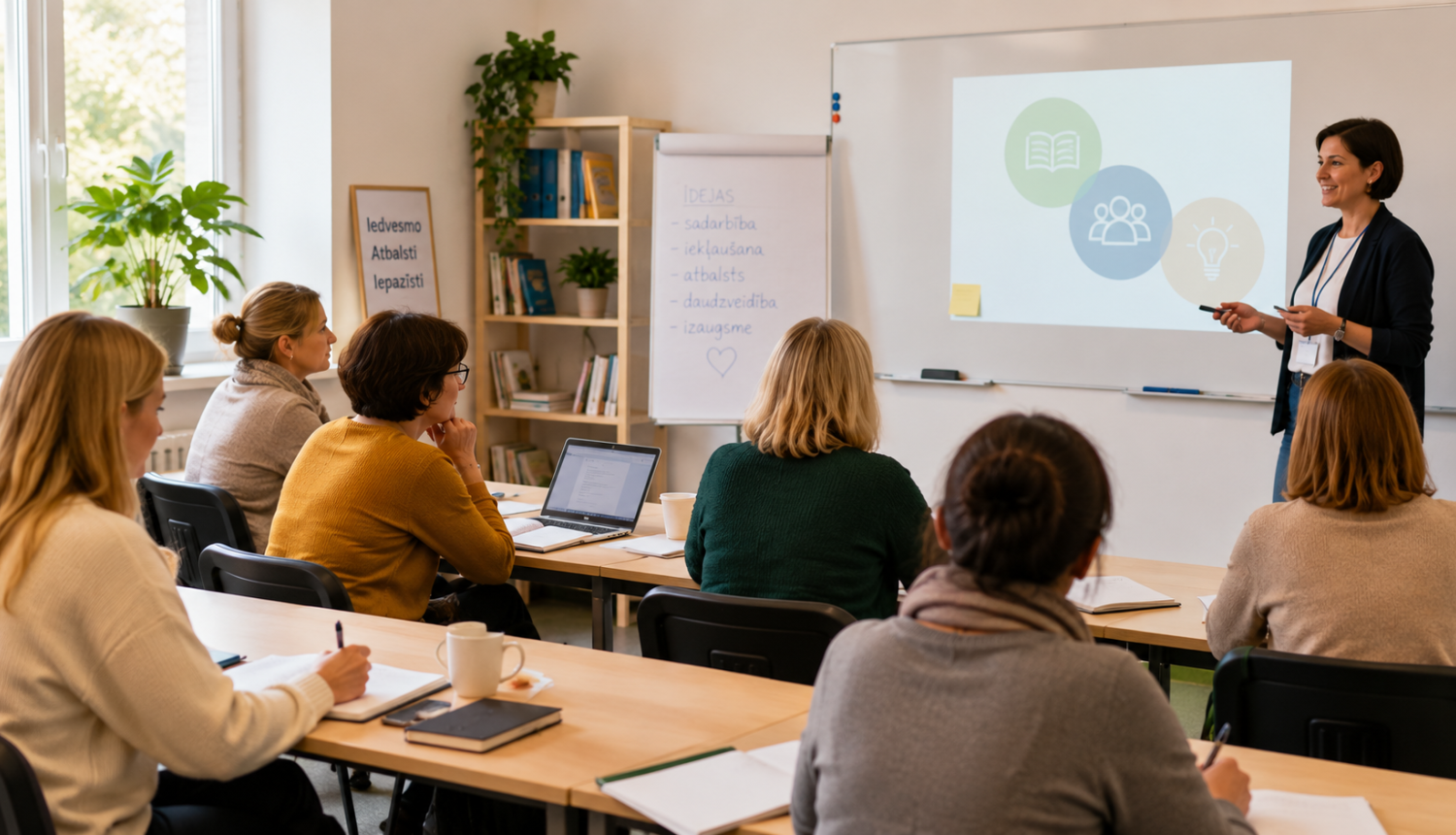
On 14 May, the fourth and final session of the professional competence development course cycle for teachers, “Developing Teachers’ Professional Competence in Working with Remigrant Children”, took place. The course was organised by Inga Madžule, Remigration Coordinator of the Vidzeme Planning Region, in cooperation with the Latvian Language Agency.
The aim of the course was to strengthen teachers’ knowledge and skills for working in a linguistically and culturally diverse learning environment, with particular attention paid to the successful integration of remigrant children into Latvia’s education system.
Over the course of four sessions, teachers acquired a broad range of knowledge and practical solutions — from understanding remigration processes and the regulatory framework to intercultural education principles, support methods for learning different school subjects, promoting children’s emotional well-being, and support opportunities for families after returning to Latvia. The course programme also examined the experience of other countries, including Germany’s approach to lifelong learning and aspects of cultural differences when working with pupils from diverse backgrounds.
Various sectoral experts and teachers shared their experience, research, and practical examples. The sessions were led by Ivans Jānis Mihailovs, Deputy Director of the Licensing and Registers Department of the State Education Quality Service; intercultural education expert Sigita Zankovska-Odiņa; teachers Viola Narbuta, Gaļina Skorobogatova, Astra Jansone, Jeļena Azareviča, and Raisa Stunžāne; Arab studies expert and University of Latvia lecturer Ingrīda Kleinhofa; Aira Priedīte; researcher Daina Gross; teacher Dace Konopecka; Evija Briede, head and lecturer of the Hamburg Parents’ School; as well as remigrant and diaspora teacher Marta Svensone.
Teachers who participated in at least three sessions will receive a certificate for completing the course.
At the same time, course participants were also offered new methodological materials for working in a multilingual learning environment. These materials provide practical examples and methodological approaches for working with pupils from different linguistic and cultural backgrounds, helping to create an inclusive, supportive, and cooperation-oriented learning process.
The methodological materials are available online:
Working in a Multilingual Environment