



Twenty stories. Twenty different journeys that have led people back home. We are delighted to have reached the 20th episode of our “Return Stories” series! We are deeply grateful to everyone who has shared their experiences and inspired others along the way. And we certainly will not stop at twenty — there are many more stories of returning home to Kurzeme that we would love to share with you!
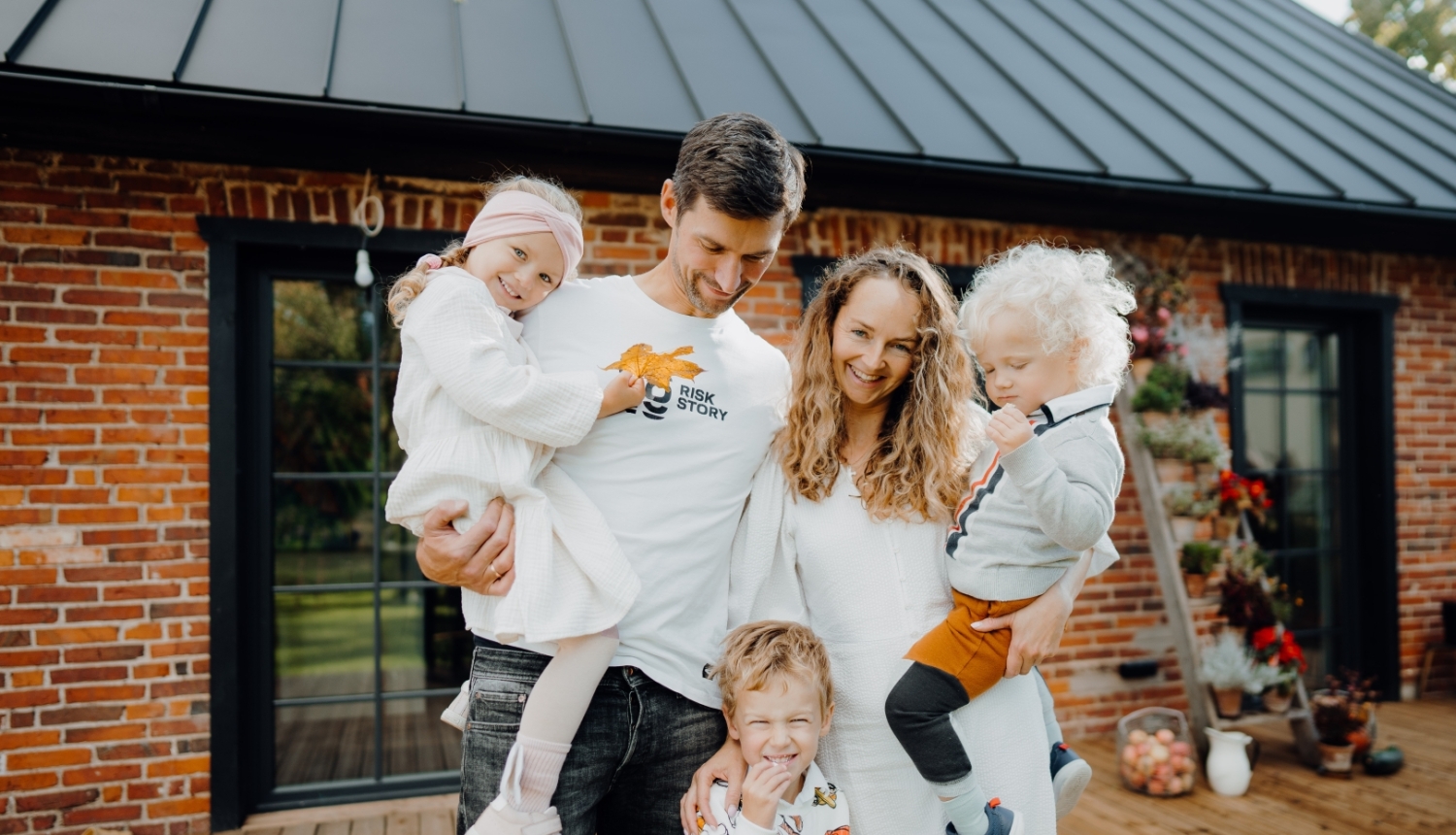
This time, we introduce Gerda Vaivode, a Kuldīga native, mother of three, event producer, and passionate traveller who has visited around 80 countries. She has lived and worked in various European countries and South Africa, backpacked across South America, and experienced so much that she sometimes feels as though she has lived at least ten lives in one. Yet, after all her travels, Gerda has found the place where she truly belongs — Kuldīga, where she and her husband Jurģis are raising their three children and building a family life in a house that is more than a century old.
“I would not describe my experience as leaving Latvia. I would call it discovering the world — something that ultimately made me love Latvia even more,” says Gerda.
A world she wanted to truly discover
Ever since her teenage years, Gerda has been drawn to the wider world — unfamiliar places, different cultures, and the opportunity to experience life beyond the familiar routines of everyday life.
“I have always had this incredibly strong feeling that I needed to see the world. Not just go away for a week's holiday, stay in a beautiful hotel, relax, and spend money, but really get to know the world — inside out.”
Gerda began looking for opportunities to travel beyond Latvia while she was still at school. She attended international camps in Denmark and Germany, spent summers working in Italy, the United Kingdom, and Cyprus, and studied in Norway through the Erasmus exchange programme during her university years. It was there, listening to fellow students talk about volunteering and adventures in distant countries, that Gerda realised she wanted to experience something similar herself.
“And I thought: I want to have a story like that too!”
After her third year at university, she took a year out and headed to South Africa. She found a programme, a job, and somewhere to live entirely on her own, spent a year living and working there, and then used the money she had earned to explore Namibia, Botswana, Zimbabwe, and Lesotho.
“In fact, I have spent almost all my spare money on travelling. Because for me, it has never been just about entertainment. It has been an education in life.”
One backpack and a year in South America
After returning to Latvia, Gerda completed her university studies, began her professional career, and continued her passion for Latvian folk dancing. Life moved at a fast pace, filled with work and various activities, until one day she realised that something needed to change.
“At 29, I found myself living in a rented one-room flat, with just a wardrobe and a bed. And that was when I realised I was burnt out and had somehow taken a wrong turn along the way.”
Gerda decided to get rid of everything she did not need, pack a backpack, and spend a year travelling across South America. Colombia, Ecuador, Bolivia, Peru, Chile, Argentina, and Brazil — a year of sleeping in tents, volunteering, meeting people, and overcoming all kinds of challenges. One of her most memorable adventures was hitchhiking 1,240 kilometres along the Carretera Austral in Chilean Patagonia.
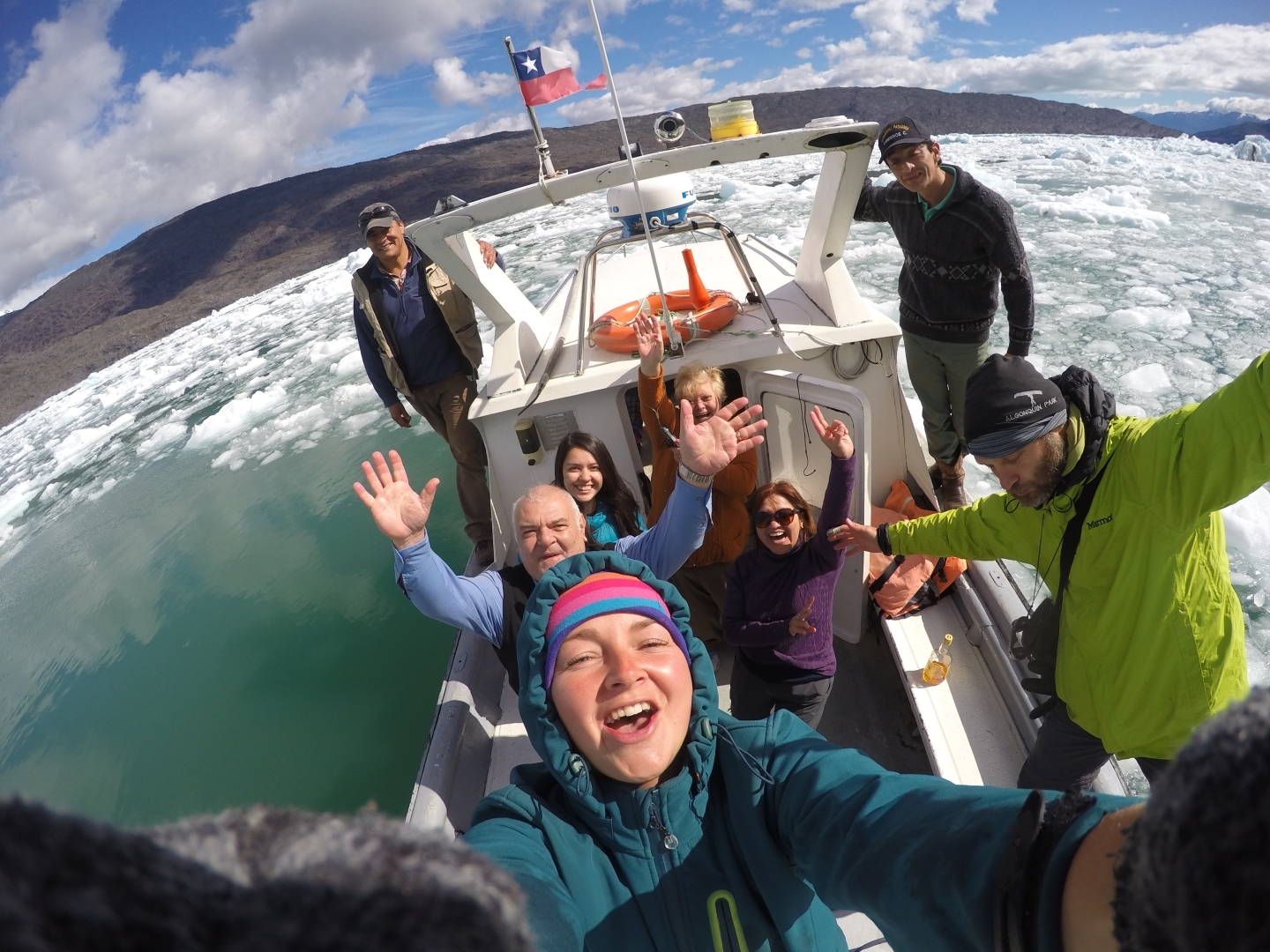
“Looking back now, I sometimes wonder — where did I find the courage, energy, and determination to do all of that?”
Gerda acknowledges that travelling is not always beautiful or easy. It can be exhausting and unpredictable, but it also teaches you to rely on yourself, overcome difficulties, and embrace the unknown. Yet when Gerda returned to Latvia, an entirely new chapter of her life began.
The love that was waiting back home
“The most beautiful thing is that on the very day I returned to Latvia, I finally ‘noticed’ the man who would become my husband,” Gerda recalls.
She had known her future husband, Jurģis, for some time. They had both danced in the Latvian folk dance ensemble “Līgo”. Back then, their lives had taken different paths, but after Gerda returned from South America, their story together began. Jurģis was born and raised in Rožupe, Latgale, where he spent his childhood in the countryside, helping with various jobs around the family home. Their relationship developed quickly. Gerda and Jurģis fell in love, got married, and soon welcomed their twins, Dora and Indriķis. Not long afterwards, their youngest son, Jānis, joined the family. As their family grew, so did their priorities and their ideas about where and how they wanted their children to grow up.
From Riga to Kuldīga — in search of childhood freedom
Gerda and Jurģis had built their life together in Riga, where they both had jobs, friends, and an established daily routine. But as their family grew, everyday life became increasingly demanding. With three young children, everything required careful planning, while support from their closest relatives was not readily available — Gerda's family lived in Kurzeme, and Jurģis's relatives were in Latgale. Gradually, they began longing for a different kind of everyday life — one with more freedom, closer contact with nature, and more time together.
“I want my children to know what it means to run barefoot around the garden. I want them to ride their bikes with the neighbourhood children until it gets dark. I want them to spend summer days swimming in the pond near home until their lips turn blue and their mum calls from the water's edge that it is time to get out.”
Gerda emphasises that this kind of childhood is possible in Riga too, but in a small town it does not require quite so much planning, driving, and organising. And so the family decided to move to Kuldīga — the town where Gerda had been born and raised, but which she was now rediscovering through the eyes of a mother of three. The decision took courage. It meant leaving behind familiar surroundings and building a new everyday life elsewhere. But Gerda's experiences of travelling had taught her not to be afraid of the unknown.
A historic house and a dream come true
Finding a suitable home in Kuldīga proved more difficult than the family had expected. There were not many properties on the market, so Gerda's mother also joined the search. Having led dance groups for many years, she knew a great number of local people. That was how the Vaivode family heard about a brick house built in 1910. During their viewing, the twins felt so comfortable there that they even fell asleep. Although other buyers were interested in the property, the owner chose the Vaivode family, and towards the end of 2022, Gerda and Jurģis became the owners of the historic house. They decided to restore it while preserving its original character. Extensive renovation work lay ahead, along with unexpected complications and the need to find temporary accommodation. With three young children, the process demanded patience and determination. When the house finally had running water and a cooker installed, the family decided not to wait until everything was finished and moved in. Their first evening in their own garden, with little lights twinkling around them, became a particularly special moment. After everything they had been through, they were finally home.
Life in Kuldīga — work, family, and more time for themselves
Living in Kuldīga has not meant giving up their professional careers. Gerda continues to work in event production and is a project manager at the LĪDERE Forum, while Jurģis works as a project manager at SIA “Aerodium Technologies”, a company that builds wind tunnels in countries around the world. The biggest changes, however, are felt in everyday life. In Kuldīga, many places are just a few minutes away, the children can grow up closer to nature, and their parents spend less time travelling from one place to another. Gerda particularly appreciates the simple pleasures of everyday life — being able to go for a swim before work, watching her children play in the garden, receiving freshly baked bread from neighbours, or borrowing a couple of hundred grams of sugar to make an apple cake.
“And the most beautiful thing is that the life you used to leave Riga at weekends to go and find is now simply the life you get to live every day.”
After 80 countries, home is still Latvia
Having travelled around the world and experienced different cultures, Gerda has come to appreciate just how valuable the things we often take for granted in Latvia really are.
“In Latvia, you do not have to explain to anyone what new potatoes with chanterelle sauce are. You do not have to explain how you feel when you hear ‘Sasala Jūrīna’. You do not have to explain what spring smells like after the first warm rain. You simply know. It is your land, your language, your people, your memories. It is your home.”
Gerda compares her own experience to the journey of Sprīdītis, the well-known Latvian fairy-tale character who sets out to discover the wider world, only to realise where home truly is. She hopes that her own children will one day venture out into the world, learn foreign languages, discover other cultures, and experience great adventures of their own. But above all, she hopes that after everything they have seen and experienced, they too will feel that special sense of belonging that Sprīdītis discovered — the feeling that their home is right here, in Latvia. For those considering returning to their homeland or moving away from the capital to build a life elsewhere, Gerda's advice is not to be afraid of change. Things do not always work out as originally planned, but sometimes it is precisely the courage to try that opens up new opportunities.
“Because sometimes the greatest risk is not leaving. The greatest risk is never daring to try.”
How return migration coordinators can help
If you have questions or need support with returning to Latvia, we encourage you to contact a return migration coordinator. After assessing your needs, the coordinator can work with local authorities or other public institutions to develop a personalised offer of support. Return migration coordinators can provide assistance with matters relating to services for families, housing, employment and business opportunities, as well as social and practical aspects of everyday life.
Further information about the services provided by return migration coordinators is available at: https://www.remigracija.lv. You can also find out more about return migration to Kurzeme and read about the experiences of others who have returned to Latvia on the Kurzeme Planning Region website: https://kurzemesregions.lv/remigracija/.
Prepared by:
Agnese Berģe
Regional Return Migration Coordinator
Kurzeme Planning Region
Translated by AI