



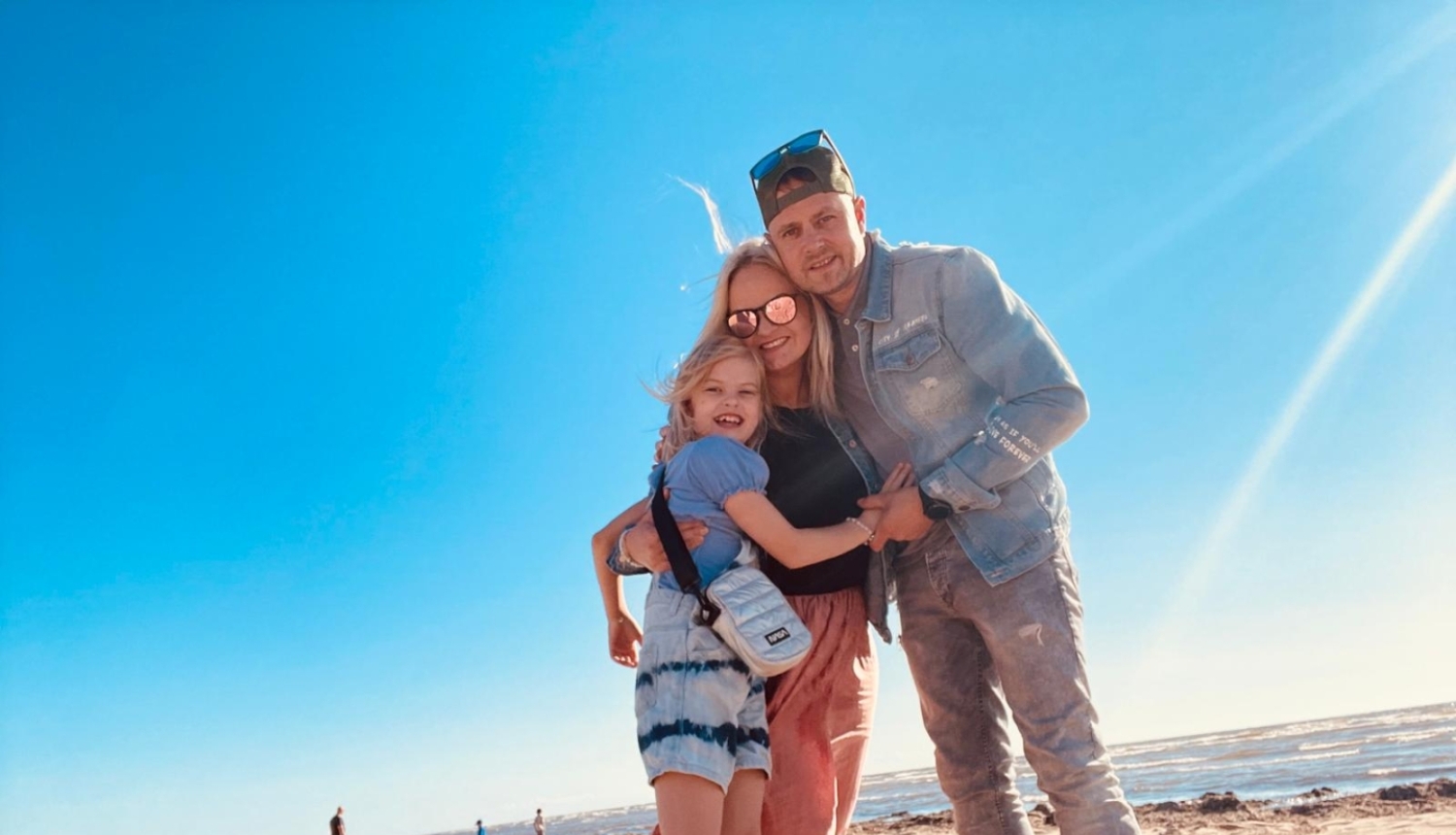
"While living abroad, there was always a thought in the back of my mind – if only I had the opportunity to return. Now that thought is gone. I am home," says Marta Svensone, who returned to Valmiera with her family after spending 12 years in Scotland.
Her story is about a conscious decision, a desire to preserve Latvian identity for her children, and the conviction that no stable job or well-organized life abroad can replace the feeling of being at home.
Marta was born in Valmiera. After finishing school, she spent five years living in Riga before moving to London for what was initially meant to be a few months. At the time, leaving Latvia seemed like nothing more than a temporary adventure, and she was convinced that she would always live in her homeland. However, the economic crisis changed everything. The bank where she worked underwent significant staff reductions, and Marta found herself having to decide on her next step. Since several of her friends had already moved to Scotland, she chose to follow them, initially believing she would stay for only a year or two.
Life, however, had other plans. In Scotland, she met her future partner, started a family, and welcomed her daughter into the world. What was intended to be a short-term stay eventually turned into twelve years abroad.
Although her daily life in Scotland had become stable and comfortable, Marta admits that the idea of returning to Latvia never left her mind. From the moment her daughter was born, she was convinced that her child should begin school in Latvia. As a result, the following years were spent preparing for that goal.
Living in Aberdeen, Marta increasingly felt the need for a Latvian environment, language, and sense of belonging. This motivated her to become actively involved in the local Latvian community. She worked as a teacher at a Latvian diaspora school and later became one of the most active organizers of Latvian community life in Aberdeen. Together with two like-minded colleagues, she co-founded the Scottish Aberdeen Latvian Association (SALA), which is now successfully run by other dedicated Latvian women who continue to organize events for fellow Latvians living in the area.
The diaspora school held a special place in Marta’s life. She emphasizes that its purpose extended far beyond teaching the Latvian language. Even more importantly, it helped children understand their connection to Latvia by introducing them to Latvian traditions, holidays, symbols, and values. Each school year, children explored stories about Latvia, sang Latvian songs, and learned about their heritage. Many of them spoke little or no Latvian in their daily lives, yet they proudly participated in school activities and maintained a connection with their country of origin.
Marta believes that diaspora schools perform invaluable work by helping children preserve their identity and develop a sense of belonging to Latvia.
Her decision to return to Latvia was motivated not only by emotional considerations but also by practical ones. While living in Scotland, she experienced firsthand how difficult it can be for families with young children to balance careers and childcare responsibilities. Childcare costs were extremely high, and after her daughter was born, Marta chose to dedicate several years to raising her child, postponing her own professional development.
In Latvia, she saw a very different reality – accessible childcare services, a wide range of extracurricular opportunities, and stronger support for families. She particularly appreciates the fact that children can participate in sports, arts, and cultural activities at relatively affordable costs. Her daughter is currently involved in swimming, choir singing, floorball, and several other activities.
Marta is convinced that these opportunities, which allow children to enjoy a diverse and enriching everyday life, are among Latvia’s greatest strengths.
The return, however, was not without challenges. The family had carefully prepared for their move, but shortly before returning, Marta learned that she was expecting their second child. As a result, she found herself in a difficult situation: she was no longer eligible for maternity benefits from Scotland, while at the same time she did not yet qualify for the corresponding benefits in Latvia.
It was an emotionally and financially demanding period during which the family had to rely on their savings. Marta believes this issue deserves greater attention, as many families returning to Latvia with children encounter similar difficulties.
Despite these challenges, Marta emphasizes that finding employment in Latvia is entirely possible. In her view, many people are held back by unfounded fears that returning home will limit their professional opportunities. She is convinced that motivated and determined individuals can find work both in larger cities and in regional areas.
As an example, she points to her husband, who is Lithuanian and arrived in Latvia without any knowledge of the Latvian language, yet managed to find a job very quickly. Marta encourages people to remain open to different possibilities and not restrict themselves to the idea that they must return to the exact place they once left. Sometimes, a fresh start in a different Latvian city can be an even better solution.
This summer marks four years since Marta and her family returned to Latvia. Looking back, she says that the greatest change has nothing to do with work, income, or everyday living conditions. Instead, it is the feeling of finally being where she truly wants to be.
She admits that life in Latvia is not perfect and that challenges exist here as well. However, the constant longing for home that accompanied her throughout her years abroad has disappeared.
"I am home, and that brings peace," she says.
Her daughter also feels deeply connected to Latvia today and often encourages friends and acquaintances to consider moving here.
To those who are still thinking about returning, Marta has a simple message: do not be afraid.
If you managed to move to a foreign country, find your place there, and build a life from scratch, then you can do the same in Latvia. In her opinion, the most important thing is not to let years pass by while waiting and doubting.
"There are people who still long for home and think about returning. I want to tell them – don’t be sad. If your heart is calling you home, then go home."